Allowable Rental Expenses in Canada
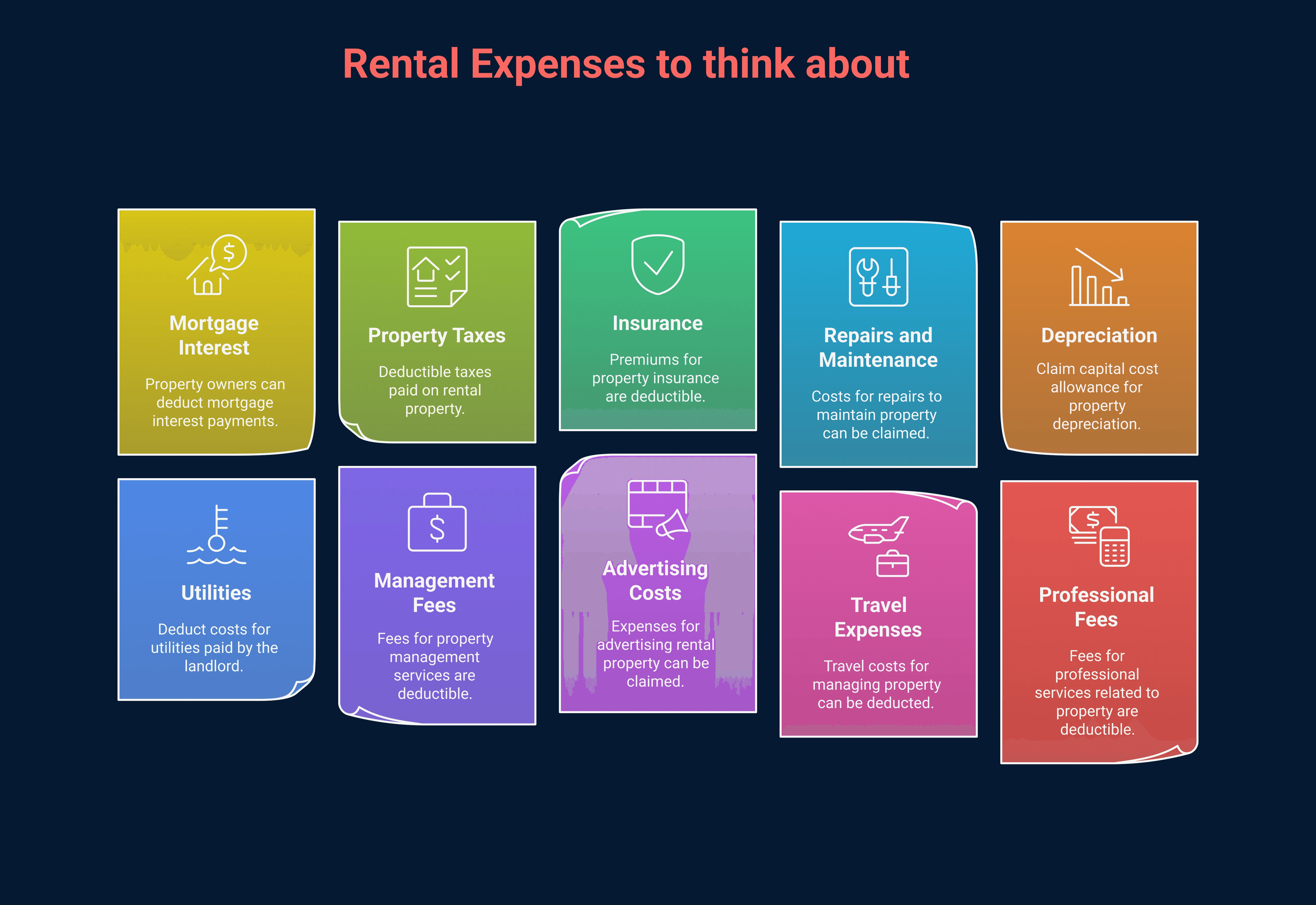
In Canada, rental property owners can claim various expenses to reduce their taxable income, which can significantly impact their overall tax liability. Understanding which expenses are allowable is crucial for maximizing deductions and ensuring compliance with tax regulations. This article outlines the key rental expenses that can be claimed in Canada and highlights the importance of professional assistance from Modern Axis Accounting to prevent penalties and ensure accurate reporting.
Key takeaways
Rental expenses must be incurred to earn rental income under ITA section 18(1)(a); personal-use and capital-improvement costs are excluded and must be added to the property's adjusted cost base instead.
Mortgage interest, property tax, insurance, repairs, utilities, professional fees, and arm's-length property management fees are fully deductible against rental income on Form T776.
Capital Cost Allowance (CCA) on the building portion (Class 1 at 4 percent) is optional and creates depreciation recapture under ITA section 13(1) on eventual sale — often best avoided unless rental losses are otherwise unusable.
Renting below fair market value (typically to family) eliminates the deduction of expenses exceeding rental income under ITA section 67 and the CRA reasonability test, capping losses at zero.
Key Allowable Rental Expenses
Mortgage Interest
Property owners can deduct the interest portion of their mortgage payments. However, mortgage principal repayments are not deductible. Additionally, fees to borrow money (such as application, appraisal, processing, and insurance fees) are deducted over five years, while a penalty or bonus paid to pay off a mortgage before it is due is prorated and deducted over the remaining term of the loan as a prepaid expense.
Property Taxes
Any property taxes paid on the rental property during the tax year can be deducted. If you have multiple properties, property taxes must be allocated according to ownership percentages or shared responsibilities.
Insurance
Premiums for property insurance, including liability insurance, are allowable expenses. If the policy covers multiple years, only the portion that applies to the current tax year is deductible.
Repairs and Maintenance
Costs incurred for repairs and maintenance to keep the property in good condition can be claimed. However, improvements that increase the property's value may need to be capitalized instead of being deducted as expenses. Routine repairs, such as fixing leaks, repainting, or replacing broken fixtures, are fully deductible.
Utilities
If the landlord pays for utilities such as water, electricity, or gas, these costs can be deducted. However, if utilities are charged to the tenant in addition to the rent charged to tenants, they should not be separately deducted.
Management and Administration Fees
Fees paid to property management companies or for administrative services related to the rental property are also deductible. This includes amounts paid for tenant screening, lease preparation, and routine property inspections.
Advertising Costs
Expenses related to advertising the rental property to attract tenants can be claimed. This includes online advertisements, newspaper listings, and costs associated with creating marketing materials.
Travel Expenses
If travel is necessary for managing the rental property, such as visiting the property or meeting with tenants, those travel expenses can be deducted. However, vehicle expenses are only deductible under certain conditions, such as owning multiple rental properties or carrying materials to the rental unit.
If you own only one rental property, travel expenses are limited to those directly related to maintaining or repairing the property. If you own multiple rental properties in different locations, you may deduct travel costs for collecting rent, supervising repairs, and managing the properties.
Professional Fees
Fees paid to accountants, lawyers, or other professionals for services related to the rental property are deductible. Legal fees related to lease agreements, eviction proceedings, and tax disputes are all valid deductions. However, legal fees related to purchasing the property are generally considered capital expenses.
Depreciation (Capital Cost Allowance - CCA)
Property owners can claim a capital cost allowance (CCA) to account for the depreciation of the property over time. However, claiming CCA on a property that is or was your principal residence can result in the loss of the principal residence exemption, potentially leading to significant capital gains tax when the property is sold. Property owners should carefully assess the long-term tax implications before claiming CCA.
CCA is calculated based on specific asset classes, with different depreciation rates applicable to buildings, appliances, and other rental property assets. Certain properties, such as land, are not eligible for CCA.
Additional Considerations
Rental Income Reporting
Landlords must report rental income on Form T776, Statement of Real Estate Rentals. This includes all rental income received in the year, including advance payments and non-cash payments such as bartered goods or services.
Rent Below Market Value
If a landlord rents a property to a family member or another related party at a rate significantly below market value, they may not be eligible to claim certain deductions. The CRA may consider this arrangement to be a cost-sharing arrangement rather than a rental business.
GST/HST Considerations
In some cases, landlords may need to collect GST/HST on rental income, particularly for short-term rentals. There are also rebates available for landlords who purchase or substantially renovate rental properties.
Importance of Accurate Reporting
Claiming allowable rental expenses can significantly reduce taxable income, but it is essential to ensure that all claims are legitimate and well-documented. Incorrect claims can lead to audits, penalties, and interest charges from the Canada Revenue Agency (CRA).
Keeping detailed records is critical for avoiding disputes with the CRA. This includes maintaining receipts, invoices, contracts, and financial statements for all rental-related expenses. The CRA requires taxpayers to keep these records for at least six years.
To navigate the complexities of rental property taxation and to ensure compliance with all regulations, it is highly advisable to seek professional assistance. Modern Axis Accounting specializes in helping property owners understand their allowable expenses and accurately report them on their tax returns. Their expertise can help prevent costly mistakes and penalties, allowing landlords to focus on managing their properties effectively.
Conclusion
Understanding and claiming allowable rental expenses is crucial for Canadian property owners looking to optimize their tax situation. By keeping detailed records and seeking professional guidance from Modern Axis Accounting, landlords can ensure they are compliant with tax laws while maximizing their deductions. This proactive approach not only minimizes the risk of penalties but also enhances the overall profitability of rental investments.
Disclaimer: This blog post is for informational purposes only and does not constitute professional tax advice. Always consult with a qualified tax accountant for personalized guidance.
Frequently asked questions
Can I deduct mortgage payments against rental income?
Only the interest portion is deductible, not principal. ITA section 20(1)(c) allows deduction of interest paid on borrowed money used to earn property income, so monthly mortgage interest reduces rental income on Form T776. The principal portion is a return of capital and is not deductible. Refinancing for personal purposes (vacation, car) makes the new interest non-deductible — only the original purchase-money interest qualifies.
What is the difference between a repair and a capital improvement?
Repairs restore a property to its previous condition and are fully deductible in the year incurred (replacing broken tiles, repainting, fixing a leaky tap). Capital improvements add value, extend useful life, or upgrade to a better quality (new roof, kitchen renovation, addition) and must be capitalized to the property's adjusted cost base. CRA Folio S3-F4-C1 covers the test in detail; courts apply factors like enduring benefit and substitution rather than dollar thresholds.
Should I claim Capital Cost Allowance (CCA) on my rental property?
Often no. CCA on the building (Class 1, 4 percent declining balance) is optional and creates recapture under ITA section 13(1) on sale — the cumulative CCA claimed comes back into income as fully taxable, unlike the lower-taxed capital gain. CCA also cannot create or increase a rental loss under regulation 1100(11). Most accountants reserve CCA for years when the rental otherwise shows a loss against other income.
Can I deduct expenses if I rent to family below market value?
Only up to the amount of rental income received. Under ITA section 67 and longstanding CRA position, renting below fair market value (typical with family) means the activity lacks a reasonable expectation of profit, so expenses exceeding income are denied. You can still claim expenses to bring net rental income to zero, but cannot create a deductible loss. To preserve full deductions, charge market rent and document it with an arm's-length lease.
Are travel expenses to manage my rental property deductible?
In limited circumstances. Travel to collect rent and to inspect or maintain the property is deductible when the rental property is in a different metropolitan area from where you live. Travel within the same city is generally treated as personal under ITA section 18(1)(h). If you own multiple properties, the deduction is more readily allowed because property management becomes a more substantial activity. Document mileage logs and trip purpose carefully.
Can I deduct property management fees and accounting fees?
Yes, both are fully deductible. Arm's-length property management fees, accounting fees for preparing the T776 portion of your return, legal fees relating to drafting leases or collecting rent, and bookkeeping fees are all incurred to earn rental income and deductible under ITA section 18(1)(a). Legal fees for purchasing the property must be capitalized to the property's cost base, and legal fees for a sale are deducted from proceeds — not from rental income.
Alex Ataman, CPA
Founder
Modern Axis CPA